When IT genuinely has to ask a user for a credential, SafeHanded encrypts it in the user's browser to one technician's key, ties it to your ticket, and destroys it when the ticket closes.
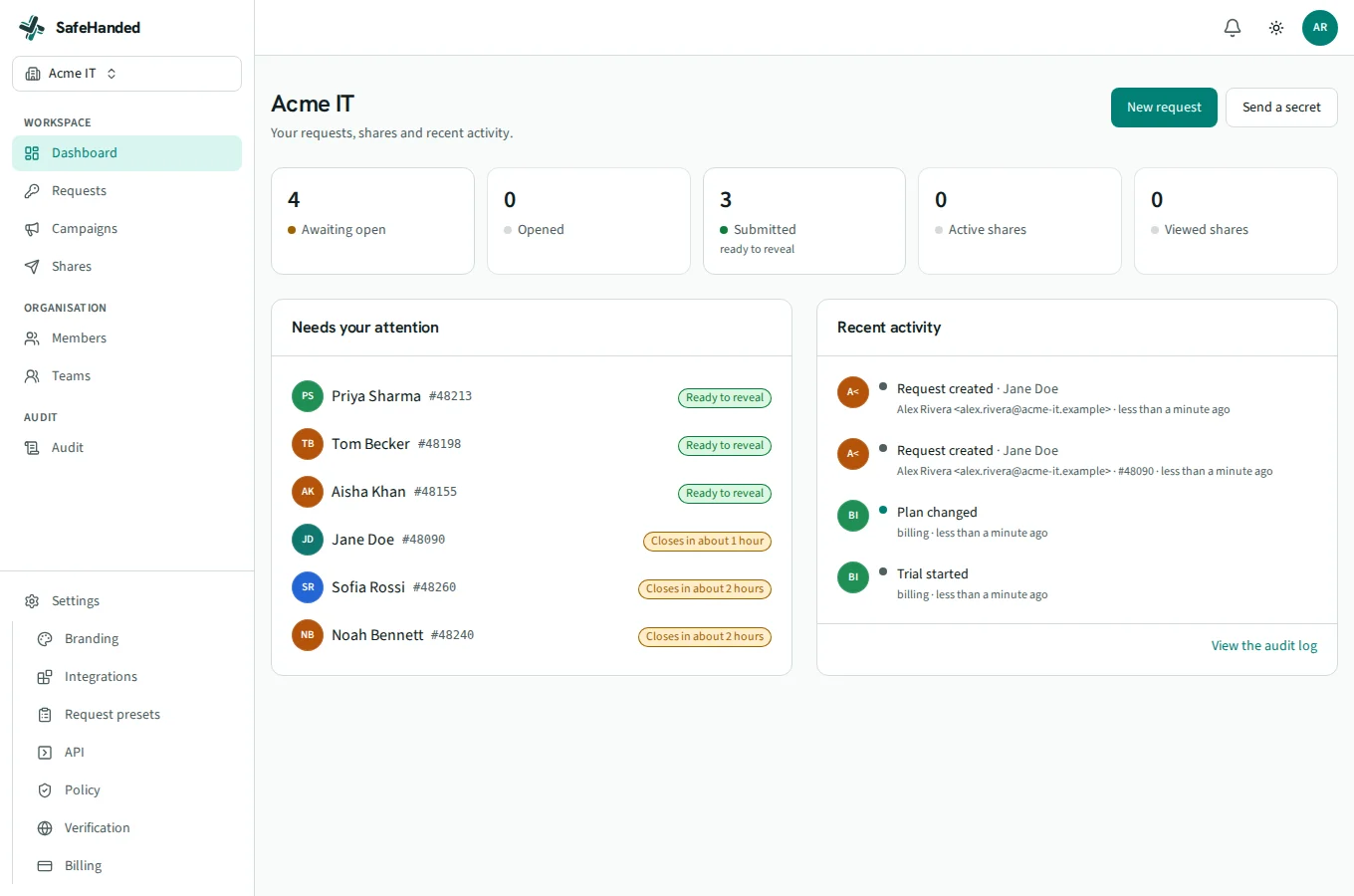
Requests, shares and recent activity across your organisation — what needs revealing is surfaced, and what's been purged is accounted for.
Files, QR codes, SSO, an API, we match all of it. These two are architectural, and they're why teams switch.
The secret is sealed in the sender's browser to a specific technician's key, unlocked only by their passkey. A leaked or forwarded link lets someone submit, never read. A breach, a rogue operator or a legal order finds no readable credential to hand over.
The record is created from your helpdesk ticket and purges itself when that ticket closes, automatically, with a note written back and a line in the audit trail. No orphaned passwords left in an inbox, a chat or a link tool.
Who, why, which ticket, how long it may live. The user gets a short-lived, branded link.
The user confirms it's genuine and types the credential, encrypted to the technician's key before anything leaves the device.
Shown once, then the record dies, on completion, on expiry, or when the ticket closes.
About a minute through the actual product: request from a ticket, the branded page your user sees, revealing the credential with a passkey, and the audit trail behind it.
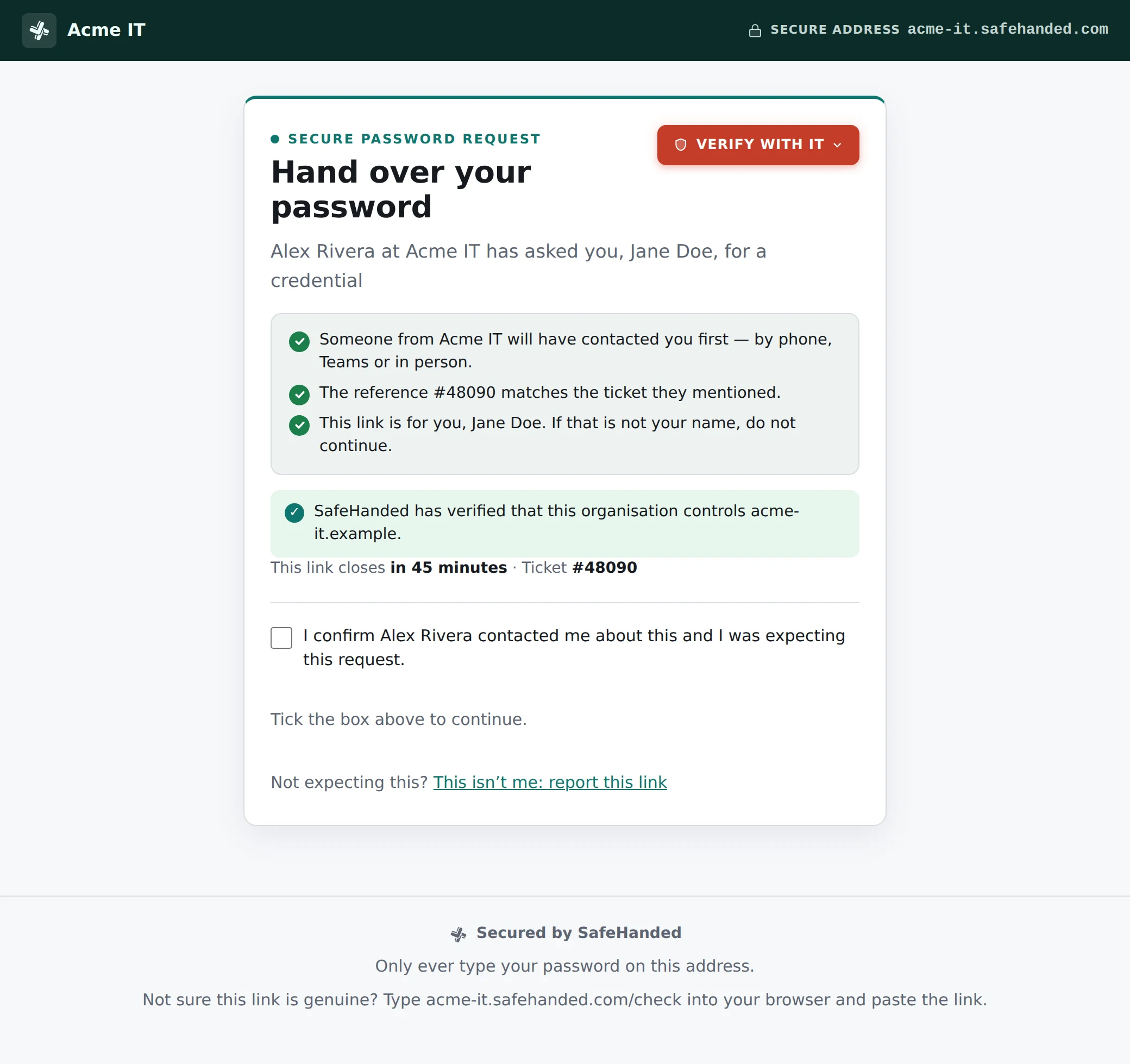
The person handing over a credential is often stressed and suspicious, as they should be. Every handover page is branded as you, on your domain, and makes the legitimate action the obvious one.
Anyone you send a link to can confirm it's genuine, and see who sent it, before they type a thing. Look-alikes are flagged. Try it with an example.
Open the Verifier →SafeHanded
Paste a link you were sent to confirm it is a genuine SafeHanded link and see who issued it. We never open the link or reveal what is inside.
Try an example:
The part of the link after the # is stripped in your browser and never sent to us. Tip: type safehanded.com/check yourself rather than trusting a link in a message.
Per-client separation, branding and domains, a ticket-linked workflow across ServiceNow, Jira Service Management, Freshservice and more (HaloPSA and ConnectWise PSA in preview), and audit evidence your clients and their cyber-insurers can read.
See SafeHanded for MSPs →Microsoft Entra, OpenID Connect, SAML and SCIM sign-in, mandatory passkeys, directory autocomplete for subjects, and a tamper-evident audit log, with a vendor that holds no key to your secrets, even if compelled.
Read the security model →Start on the free plan in minutes. Move to a trial when you're ready for clients and PSA, no card until you decide to stay.